
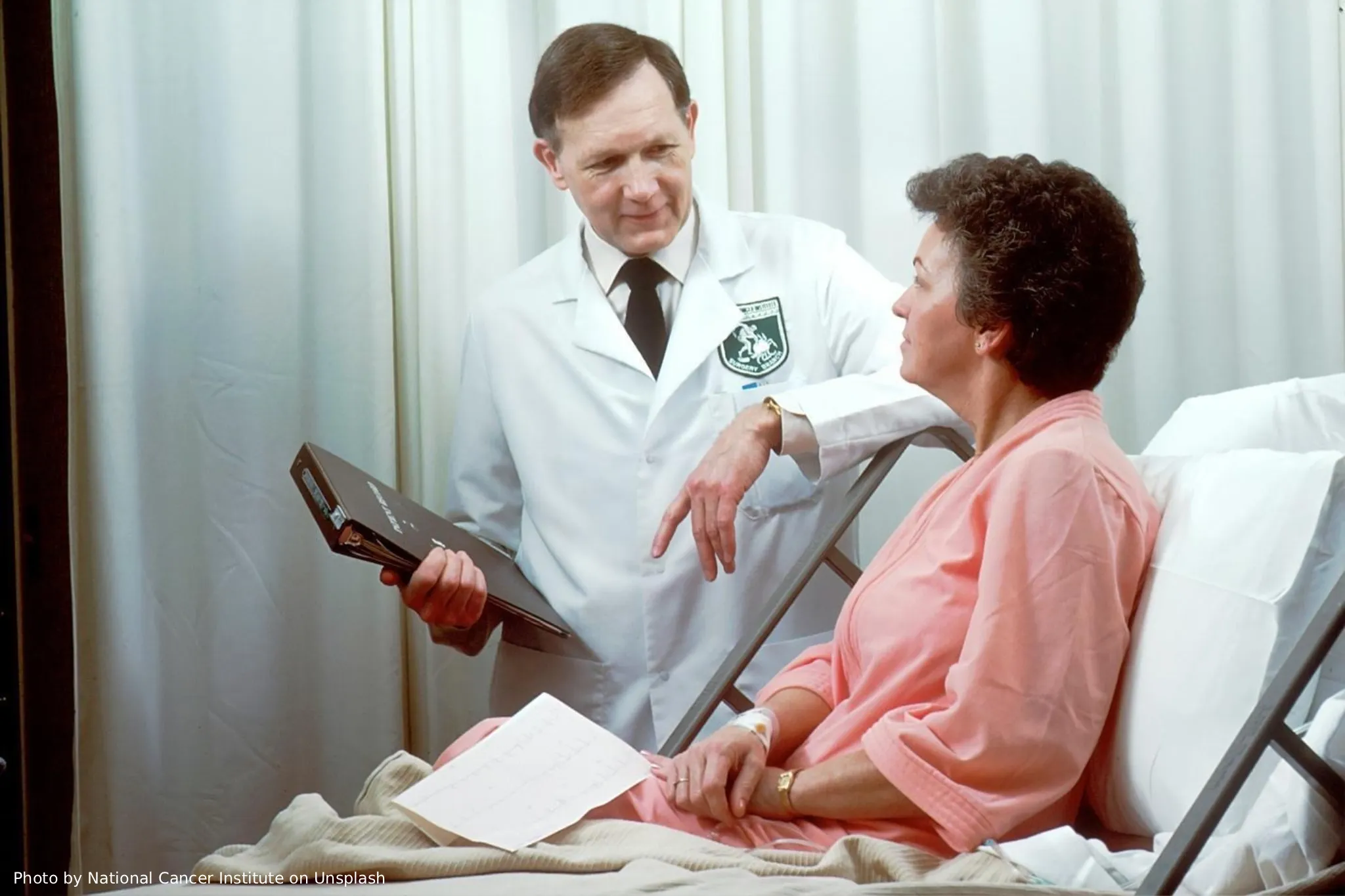
As artificial intelligence reshapes medicine, the organizations that will lead the next decade won't simply develop better technologies, they'll understand people better.
Every generation believes it is witnessing medicine's defining revolution. Ours may be the first in which scientific progress is advancing faster than our ability to understand the people it is meant to serve.
Artificial intelligence is transforming diagnosis. Precision medicine is redefining treatment. Genomics is reshaping prevention. Cell and gene therapies are expanding what medicine can achieve. Pharmaceutical innovation is accelerating through computational biology, advanced analytics, and unprecedented collaboration across industry, academia, regulators, and healthcare systems. We are entering an extraordinary era of scientific progress.
Yet amid this extraordinary acceleration, we risk overlooking a quieter revolution – one that may ultimately prove even more consequential than the technologies themselves. It is changing not only what healthcare can do, but what healthcare exists to achieve.
For more than a century, medicine has advanced by becoming increasingly precise in its understanding of biology. We have learned to identify pathogens, decode the human genome, develop life-saving medicines, and transform diseases once considered fatal into chronic, manageable conditions. The progress has been remarkable.
But healthcare's next frontier is no longer defined solely by discovering better medicines. It is ensuring that our understanding of people evolves as rapidly as our understanding of biology.
Healthcare's next competitive advantage will not belong solely to the organizations with the most advanced technologies. It will belong to those capable of combining scientific excellence with a deeper understanding of human experience.
As a pharmacologist and healthcare strategist leading pharmaceutical transformation and localization initiatives across the Middle East, I have witnessed this evolution first-hand.
I have seen how advances in biotechnology, regulatory science, manufacturing, artificial intelligence, and cross-sector collaboration are reshaping not only how medicines are developed, but also how healthcare systems themselves are designed.
Innovation has never moved faster. Yet despite this extraordinary progress, many patients still leave a consultation carrying the same quiet thought:
“I don’t think anyone really understood me.”Healthcare has never possessed more knowledge, yet many people have never felt more invisible. Technology can diagnose disease. It cannot tell us what makes life worth living.
That paradox may become one of the defining leadership challenges of twenty-first-century healthcare – not because we lack scientific capability, but because human understanding has become the limiting factor.
The healthcare organizations that will define the next decade will not necessarily be those with the most advanced technologies. They will be those that best understand the people those technologies are ultimately designed to serve.
Beyond Precision
Medicine has become exceptionally good at measuring the human body. We can identify molecular abnormalities years before symptoms appear. We can analyze millions of clinical data points within seconds. Predictive models increasingly recognize patterns invisible to even the most experienced specialists. Drug discovery is accelerating, and precision medicine is replacing one-size-fits-all therapies with treatments tailored to individual biology.
These achievements represent some of humanity’s greatest scientific accomplishments. Yet biology, however sophisticated, tells only part of the human story.
Disease can be classified with remarkable precision. Illness cannot.
Disease exists in biology. Illness exists in lived experience.
It reshapes relationships, careers, identity, aspirations, and even the way people imagine their future. Two patients may receive the same diagnosis and treatment, and achieve identical clinical outcomes, yet experience profoundly different realities.
Medicine has become extraordinarily sophisticated at understanding disease. Its next frontier is understanding the person living with it.
For much of modern medicine, competitive advantage came from understanding biology better than anyone else. Today, artificial intelligence is dramatically accelerating that advantage, enabling us to analyze biology with unprecedented speed and precision. Yet the next differentiator will not be technological alone. It will be our ability to understand the human experience with equal depth. The future of healthcare will belong to the organizations that integrate all three.
The Pharmaceutical Industry Is Quietly Redefining Innovation
This evolution is already transforming the pharmaceutical industry itself.
For decades, pharmaceutical innovation was measured primarily by scientific discovery: identifying new therapeutic targets, developing more effective molecules, and bringing breakthrough medicines to market. Those ambitions remain fundamental, but they are no longer sufficient on their own.
Today, innovation is increasingly judged by a broader question:
Does this genuinely improve the lived experience of patients?That seemingly simple question is quietly redefining what innovation truly means. Real-world evidence, patient-reported outcomes, behavioral science, digital health, health economics, implementation science, and value-based healthcare are no longer peripheral disciplines. Together, they signal a profound shift in how healthcare defines value.
Scientific excellence remains essential. Increasingly, however, it is expected to translate into outcomes that matter beyond the laboratory – outcomes that meaningfully improve people's lives. A medicine cannot be considered truly transformative if patients cannot access it, adhere to it, incorporate it into their daily lives, or experience a meaningful improvement in their quality of life. Likewise, a scientific breakthrough that never reaches patients because healthcare systems cannot deliver it sustainably remains only partially fulfilled.
The pharmaceutical industry is no longer defined solely by discovering better medicines. It is increasingly expected to help design better healthcare systems. That requires capabilities extending far beyond science alone. It demands an understanding of patients, health systems, behavior, culture, economics, and trust. Ultimately, it requires understanding people as deeply as we understand disease.
What Filmmaking Unexpectedly Taught Me About Medicine
One of the most valuable lessons I've learned about healthcare came from an unexpected place: filmmaking.
Alongside my work in healthcare, I have spent years writing and directing both fiction and documentary films. At first glance, they seem to inhabit entirely different worlds. One is grounded in science, the other in storytelling. Over time, however, I realized they are driven by the same ambition: to understand the complexity of human experience.
Filmmaking taught me that facts rarely explain people. Stories reveal them. Two individuals can live through the same event and tell entirely different stories, not because one is truthful and the other is not, but because meaning is deeply personal.
Healthcare encounters that same reality every single day. Every consultation brings together two equally important narratives. One is clinical, informed by symptoms, diagnostics, treatment pathways, and scientific knowledge. The other is profoundly human, shaped by identity, family, culture, aspirations, resilience, uncertainty, and the deeply personal meaning each individual gives to illness.
Exceptional healthcare begins when those two narratives stop competing and start informing one another. Scientific knowledge tells us what is happening. Human understanding tells us why it matters. The future of medicine will depend on integrating both.
For centuries, medicine has sought to understand the human body. The next chapter will require us to understand the human experience with equal sophistication. This is not a philosophical aspiration. It is rapidly becoming a strategic imperative for healthcare organizations, pharmaceutical companies, policymakers, and everyone responsible for designing the future of care.
The Missing Dimension of Innovation
We often describe healthcare as becoming more data-driven, and it certainly is. But data alone does not create understanding. Information is not the same as insight, and insight is not the same as wisdom.
Artificial intelligence will continue to transform diagnosis, accelerate drug discovery, optimise clinical trials, and support increasingly personalised care. These advances should be embraced, not feared.At the same time, they compel us to reconsider what remains uniquely human.
Technology recognizes patterns. Humans create meaning.
An algorithm may identify disease earlier than any physician ever could. It cannot fully understand what that diagnosis means to the young mother wondering whether she will watch her children grow up, the entrepreneur confronting the loss of an identity built over decades, or the elderly patient whose greatest fear is not illness itself, but becoming a burden to the people they love.
Those realities rarely appear in datasets, yet they shape nearly every decision that follows. They influence whether people seek treatment, trust clinicians, adhere to therapy, or find the strength to keep going.
Paradoxically, the more intelligent our technologies become, the more valuable distinctly human capabilities become alongside them: empathy, judgement, communication, trust, cultural intelligence, and ethical discernment.
Humanity is not becoming obsolete. It is becoming healthcare's next strategic advantage.
The Future Belongs to Integrators
History’s greatest breakthroughs rarely emerge from a single discipline. They emerge at the intersection of disciplines, perspectives, and ways of thinking. Healthcare's future will be no exception. Tomorrow's healthcare leaders will not be distinguished solely by scientific expertise or technical excellence.
They will be integrators – leaders capable of connecting biology with behavior, technology with ethics, innovation with accessibility, science with culture, and healthcare with the realities of everyday life. The future of healthcare will depend less on choosing between technology and humanity than on integrating the two. The organizations that succeed will not treat empathy as a soft skill or patient-centered care as a slogan. They will embed human understanding into strategy, innovation, leadership, and decision-making.
Perhaps this is why I have never viewed pharmacology, business strategy, and filmmaking as separate pursuits. Science explains how the body works. Strategy determines how innovation reaches people. Storytelling reminds us why any of it matters in the first place. Together, they offer a more complete understanding of healthcare's ultimate purpose—not merely extending life, but enriching the experience of living it.
Redefining Progress
Perhaps the greatest measure of progress in healthcare will never be how intelligent our technologies become.
It will be whether our healthcare systems become more humane; whether innovation deepens trust rather than distance; whether scientific breakthroughs strengthen compassion instead of replacing it; and whether we continue to see the person before we see the pathology.
The next revolution in healthcare will undoubtedly be technological. But it will not be technological alone. Its success will ultimately be measured by whether every scientific breakthrough brings us closer to the people it is meant to serve – not further away from them. Behind every molecule is a scientist searching for possibility. Behind every clinical trial is a family waiting for hope. Behind every healthcare system is a society making choices about dignity, equity, and the future it wishes to build. Behind every patient is more than a diagnosis. There is a life still unfolding, shaped by relationships, aspirations, fears, and hopes that no algorithm can fully capture.
The future of healthcare will belong to those who understand that every scientific breakthrough ultimately serves a human story.