

For almost two decades, football had one question it could never seem to let go of.
Messi or Ronaldo?
It began as a debate about football and slowly became something much larger. Talent against discipline. Instinct against determination. Elegance against force. The player who seemed to see the game before everyone else and the player who seemed willing to outwork everyone else. Every goal, every trophy, every missed chance and every heartbreak became another piece of evidence in an argument that millions of people around the world never quite wanted to end.
Because this was never simply the story of two footballers. It was the story of an era in which greatness had two faces, and for twenty years, neither allowed the other to become ordinary.
Lionel Messi has now played his final match for Argentina. But the farewell was never really about one match. For days, Argentina seemed to be preparing itself to say goodbye. Perhaps the celebrations stretched far beyond the match because no one was quite ready for there to be no next time. There was the hope of seeing him once more, hearing him once more, holding on to every moment they could, as though years of memories could somehow be gathered into a few final days. They were trying to make the goodbye large enough to hold everything Messi had given them, even knowing that no celebration could ever come remotely close to the feeling he had given them in return. The Argentine Football Association organised a “Gracias, Leo” fan fest, Buenos Aires lit its monuments in Argentina’s colours and fans travelled from across the country to be there. The feeling reached beyond Argentina too, with tributes coming from former teammates, fans and footballers around the world.
Before the match, Messi stood beside his three children as the Argentine national anthem played and struggled to hold back his tears. Then, in the tenth minute, the game stopped. His No. 10 became a minute of applause, fireworks and thousands of voices calling his name. Even the Benin players joined the tribute. Messi scored his final Argentina goal from the penalty spot and assisted the other two in a 3 to 0 victory.
It was almost impossibly poetic.
For years, Argentina had asked Messi to give it something more. He had been criticised for defeats, compared with Maradona and questioned for not winning enough with the national team. He lost the finals. He once stepped away from international football. He returned. Then came the Copa América, the Finalissima and, finally, the World Cup that had once seemed destined to remain just beyond his reach.
By the time he walked away, he was Argentina’s most capped player and its record international goalscorer, with 208 appearances and 126 goals. More importantly, he had become part of the country’s memory. That may be why his farewell felt less like a retirement and more like a country trying to hold on to a part of itself as it let him go.
Messi himself had written, when announcing his decision, “I gave it my all.” And perhaps there was nothing left to ask of him after that.
Cristiano Ronaldo’s story, at least for now, does not have the same finality. His last appearance for Portugal came in a 1 to 0 victory over Wales on 24 September 2026. Days later, he left Portugal’s training camp after a dispute with the new manager Jorge Jesus over an understanding about his playing time and how the situation would be explained publicly. Ronaldo has accepted responsibility for leaving and apologised to his teammates and supporters before leaving the camp.
And yet, emotionally, something about the moment feels like an ending.
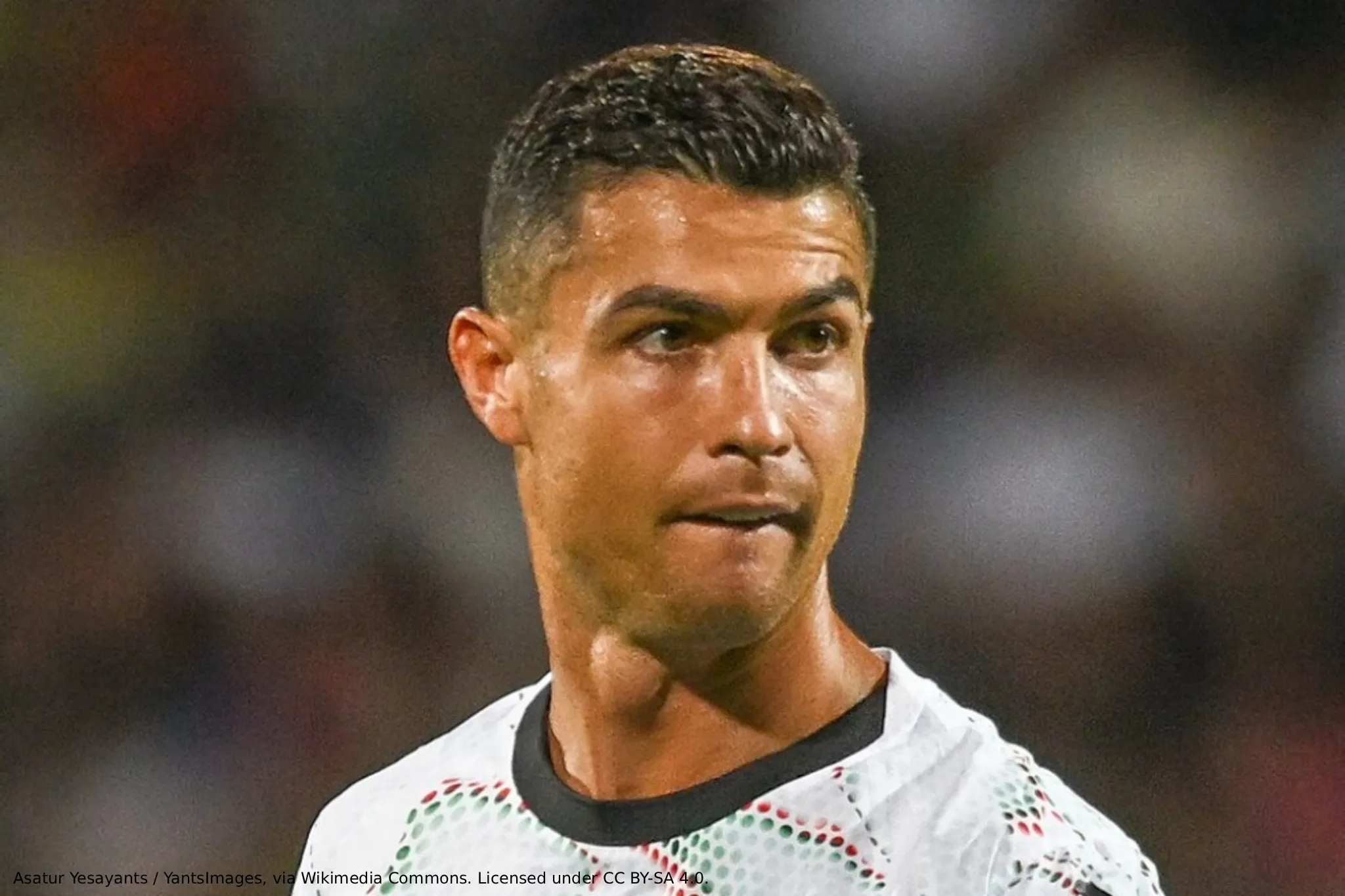
Ronaldo has always carried himself differently. Where Messi’s public image has often seemed quieter and more self-effacing, Ronaldo has been far more direct about what he expects from himself and from the people around him. At times, his actions and the way he carries himself can be perceived differently by those around him, but it is also part of the fierce self belief that allowed him to keep rebuilding himself, demanding more and returning to Portugal long after many would have accepted that their best years were behind them. And for now, his goodbye remains unfinished.
For years, No. 7 meant Cristiano Ronaldo to football fans around the world before it meant almost anything else. When he left camp, Rafael Leão appeared in the famous No. 7. There was nothing deliberate in the change, but seeing that number on another player so soon after Ronaldo had left, carried a strange kind of sadness. It was as though time had slipped quietly through our hands, reminding us that even the things we once thought would always be there eventually move on without us.
Still, football is not always experienced through rules. Sometimes a number carries years of memories, a nation’s greatest nights and a player’s entire identity. Seeing it move to another player so quickly did not erase Ronaldo’s legacy, but it offered a reminder of how quickly football has to move even when history has not caught up with it.
That is perhaps the painful contrast between these two farewells. One was surrounded by a country that seemed unwilling to let its captain go. The other left his national team amid disagreement and uncertainty, with his next chapter still unwritten. It would be unfair to call one loved and the other unwanted. Both men have given too much to their countries for their legacies to be measured by the circumstances of a single farewell. Some goodbyes are simply harder to accept than others.
For years, we argued over which man was greater without realising how rare it was to have them at all. We reduced them to comparisons when perhaps we should have been paying attention to what they were actually doing. Messi gave football movement that could make a crowded defence appear momentarily still. Ronaldo turned ambition into a physical language, changing his game, his body and himself to remain among the best.
For twenty years, they gave us another reason to watch, another match to remember and another performance to argue about. We spent those years asking which of them was greater. The more important question is what they gave us while we were busy deciding.
They gave millions of people memories that became part of their own lives. A child who wore No. 10 or No. 7. A family gathered around a television. A match remembered years later not for its score, but for where you were when you watched it. That is what makes the end of an era feel different from an ordinary retirement. We are not only saying goodbye to players. We are saying goodbye to the years of our own lives that we experienced through them.
There will be no more years in which the world waits for one to answer the other. Eventually, we will stop asking who was better because the question will belong to history. What will remain is the simpler thing that statistics cannot measure: how much these two men made us feel. For twenty years, they pushed the limits of what we thought a footballer could sustain, achieve and demand from himself. They turned excellence into expectation and made greatness feel almost ordinary because every impossible performance was followed by another. Their era did not simply give us two extraordinary players. It changed the standard by which extraordinary was understood.
References:Llega el Fan Fest “Gracias, Leo”: una experiencia única para despedir a Messi junto a la Selección. (2026). Sitio Oficial de La Asociación Del Fútbol Argentino. https://www.afa.com.ar/es/posts/llega-el-fan-fest-gracias-leo-una-experiencia-unica-para-despedir-a-messi-junto-a-la-seleccion
Lionel Messi conmovido en el último Himno de una era. (2026). Sitio Oficial de La Asociación Del Fútbol Argentino. https://www.afa.com.ar/es/posts/lionel-messi-conmovido-en-el-ultimo-himno-de-una-era
Lionel Messi: dos décadas de grandeza y un legado para siempre. (2026). Sitio Oficial de La Asociación Del Fútbol Argentino. https://www.afa.com.ar/es/posts/lionel-messi-dos-decadas-de-grandeza-y-un-legado-para-siempre https://www.reuters.com/sports/soccer/teammates-fans-bid-emotional-farewell-messi-ahead-argentina-finale-2026-10-06/ https://www.reuters.com/sports/soccer/ronaldo-accuses-coach-jesus-broken-promises-leaves-portugal-return-open-2026-10-06
UEFA. (2016, July 10). Cristiano Ronaldo’s record-breaking EURO. UEFA.Com; UEFA. https://www.uefa.com/uefaeuro/history/news/0253-0d81c491a256-b198b14f955a-1000--cristiano-ronaldo-s-record-breaking-euro/